News/ 23 June 2026

The Forum goes to Belfast
Less is More: Reflections on the 2026 Annual Conference, Belfast
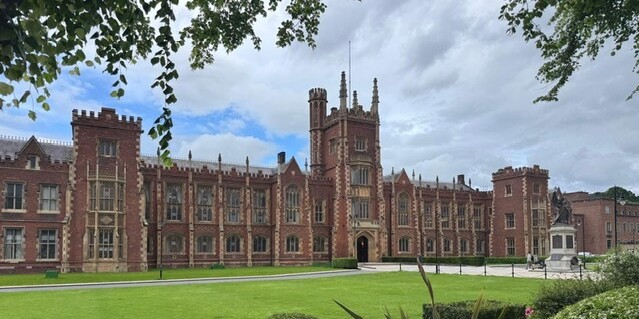
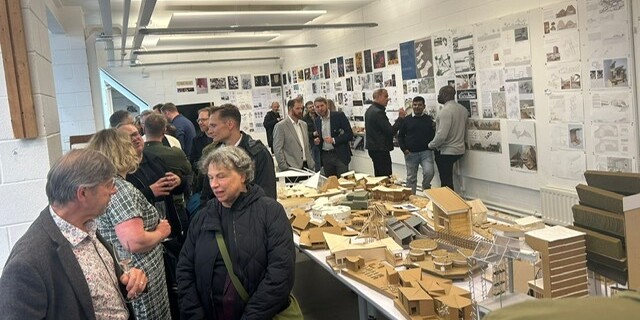
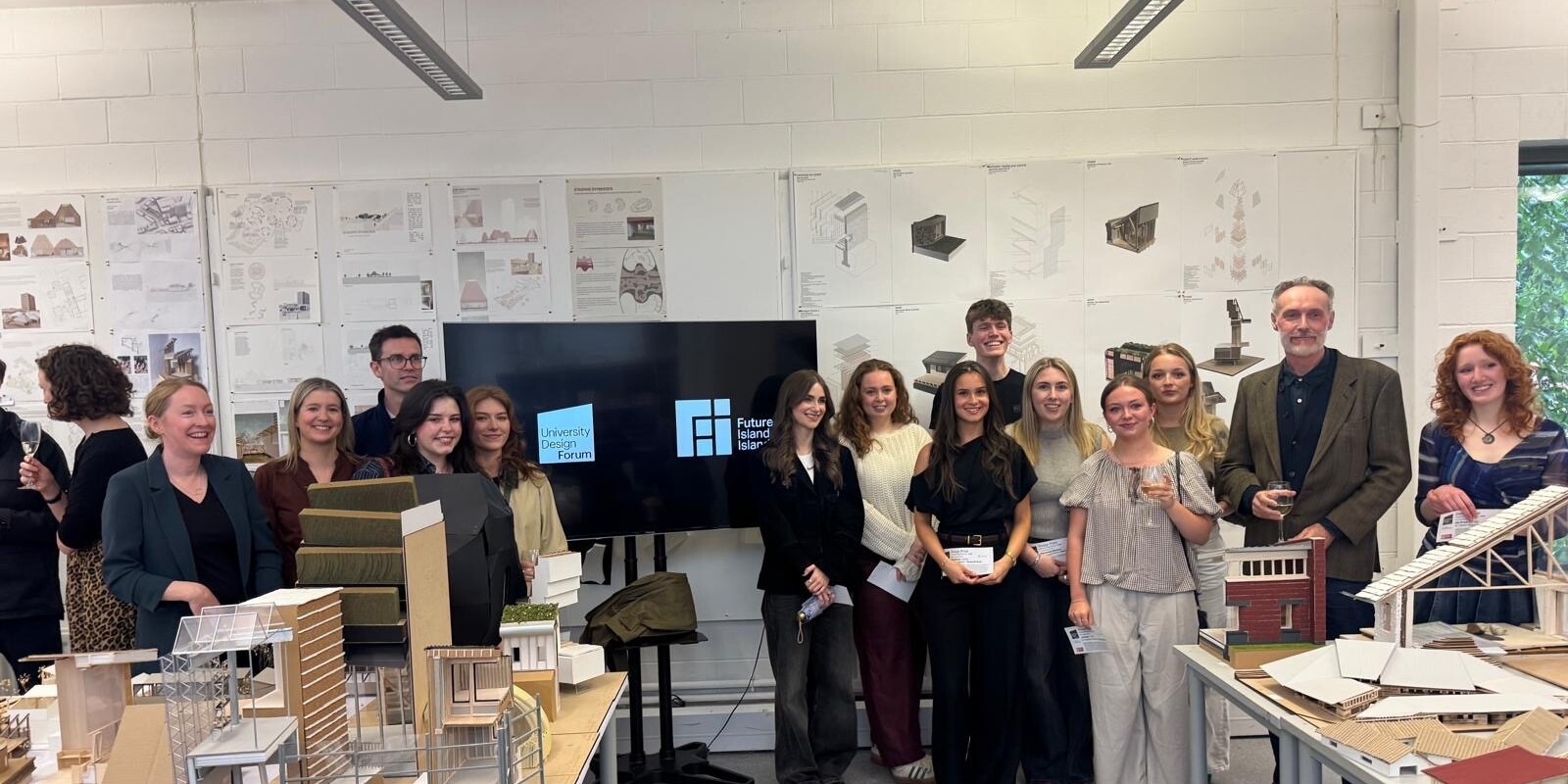
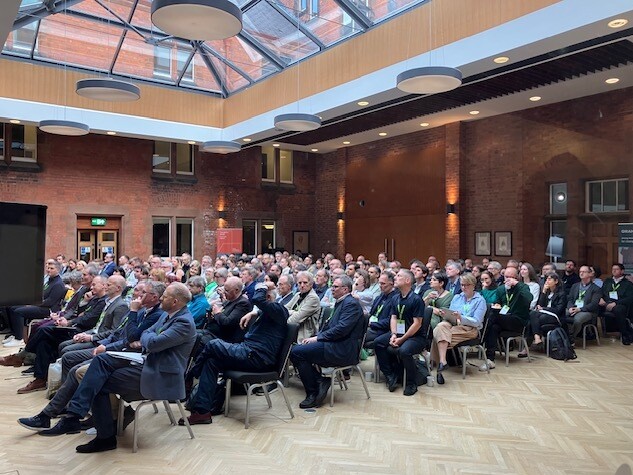
The University Design Forum's 2026 Annual Conference took place over two and a half days in Belfast, hosted jointly by Queen's University Belfast [QUB] and Ulster University [UU}, under the theme "Less is More." The conference opened on the Monday evening with a drinks reception and the announcement of the University Design Forum Student Prize at the School of Architecture, QUB. Andy MacFee of AMA had worked with the School over a number of months with a brief linked to the conference theme. This challenged third-year students to address sustainable design for two very different sites: one on Rathlin Island along the north coast of Ireland, and one at the heart of the QUB campus at Chlorine Gardens. The winners were Rachel McManus (1st, Substrata Stranmillis), Rachel McVeigh (2nd, The Leeward), Ben Blaney (3rd, Rathlin Cloister), Amelia Douglas (4th, Roofline Courtyards) and Hannah Weir (5th, Rathlin Fragments) — a strong and varied set of responses that demonstrated, encouragingly, that the questions this conference asks of practising architects, are ones the next generation is already asking.
The conference itself, across its two main days, offered a packed and wide-ranging programme of keynotes, members' submissions, building tours, a debate and an interactive research session, drawing delegates from across the UK, Ireland and continental Europe.
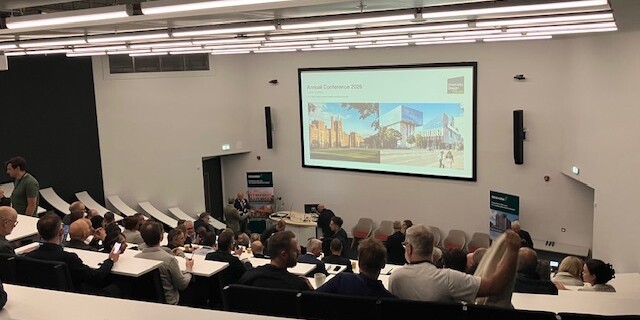
Day One's programme opened with a keynote from Ian McKnight of Hall McKnight, who set a tone that recurred throughout the conference: that "less" is not primarily a function of constrained budgets, but a discipline of architectural thought, the resolution of one clear idea, rather than the accumulation of many. He illustrated this with a range of projects, including exceeding a client's expectations by yielding 12 housing units from a site anticipated to deliver only 7, the rejuvenation of a derelict shop unit into a thriving pub and event space, and a project at Dublin Castle in which the discipline was one of stripping back and being authentic about the nature of intervention.
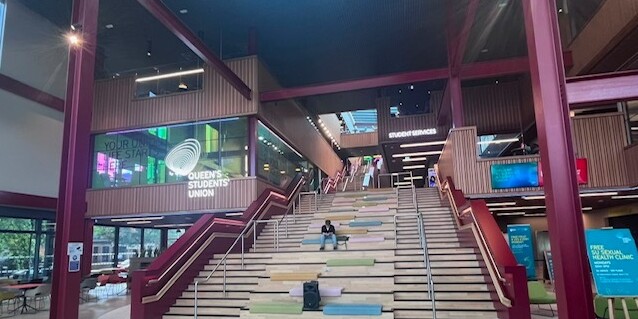
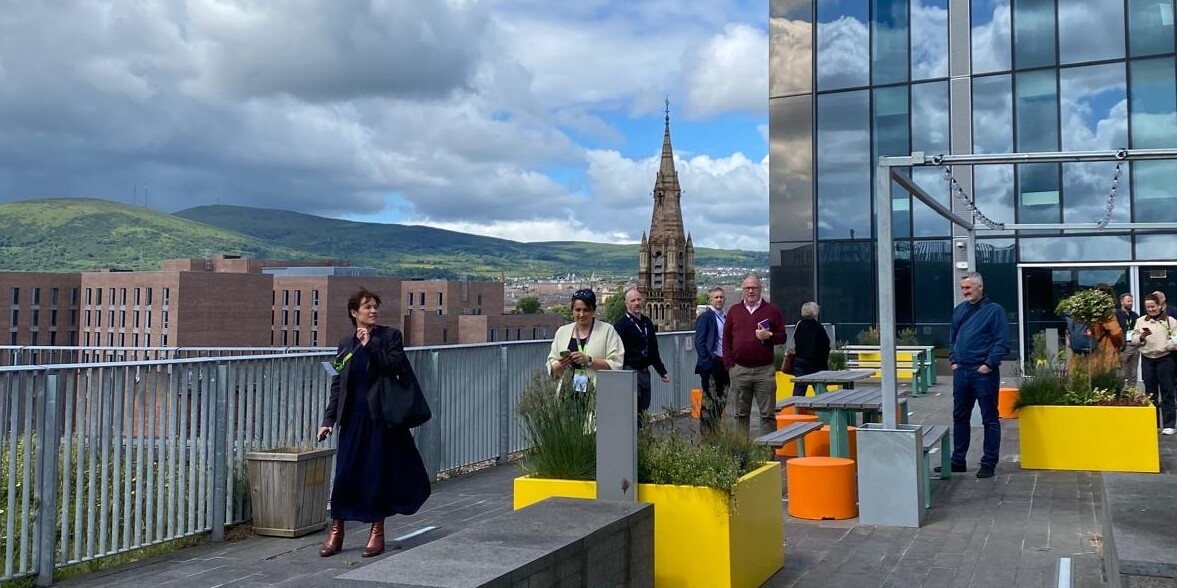
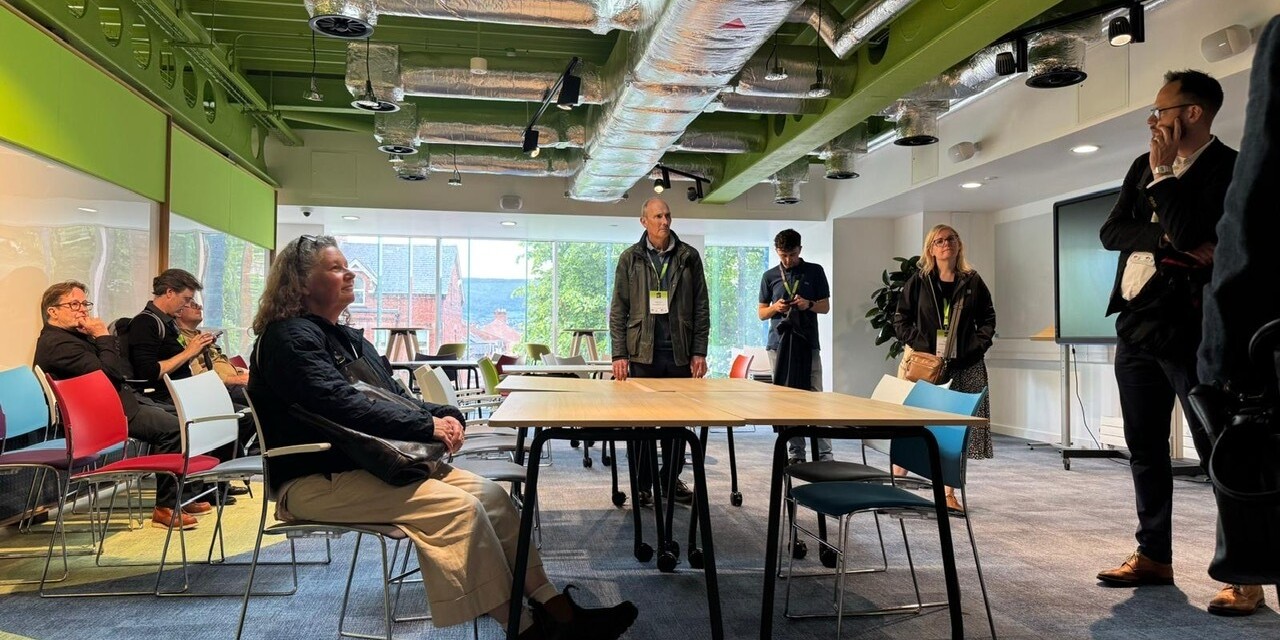
The theme could be tested directly that same afternoon, with delegates touring QUB's recently completed buildings at Riddel Hall and across the wider campus: the Queen's Business School Student Hub by Todd Architects, the Computer Science Building by Kennedy Fitzgerald, the Student Centre at One Elmwood by Hawkins\Brown and RPP Architecture Ltd, and the conservation-led refurbishment of the Graduate School in the Grade B listed Lynn Building by Consarc. Building tours are always a highlight of the Forum's annual conferences, and what makes them particularly insightful is hearing directly from the clients and architects involved. Conor McGowan, Head of Estates Planning, and Jonathan Thompson, Estates Manager Planning, set the context of QUB: impressive academic standing, 25,000 students and 5,000 staff, ninth oldest university in the UK, and considered one of the ten most beautiful campuses in the world.
A regular and valued feature of Forum conferences are the films of the European study trips, this year covering Dublin and Paris, presented by Rod McAllister, tour leader and film editor: a perfect after-lunch watch. Further context on Trinity College Dublin's [TCD] masterplanning and use of data was provided in the first of the members' selected presentations, with a joint presentation by the TCD and Allies & Morrison. The Forum's Research Group session, "Doing More with What We Have," extended the theme to large, flat-floor teaching and learning spaces, asking what becomes possible when they are reimagined for more diverse forms of campus life, rather than simply maintained as legacy infrastructure.
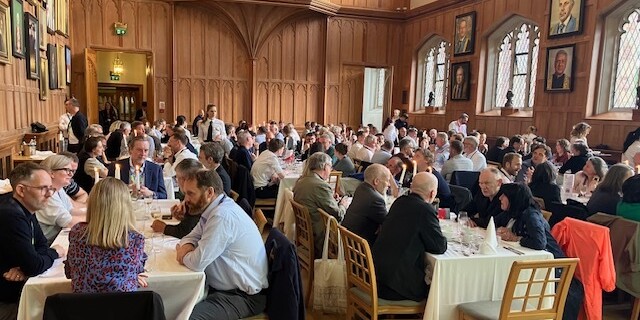
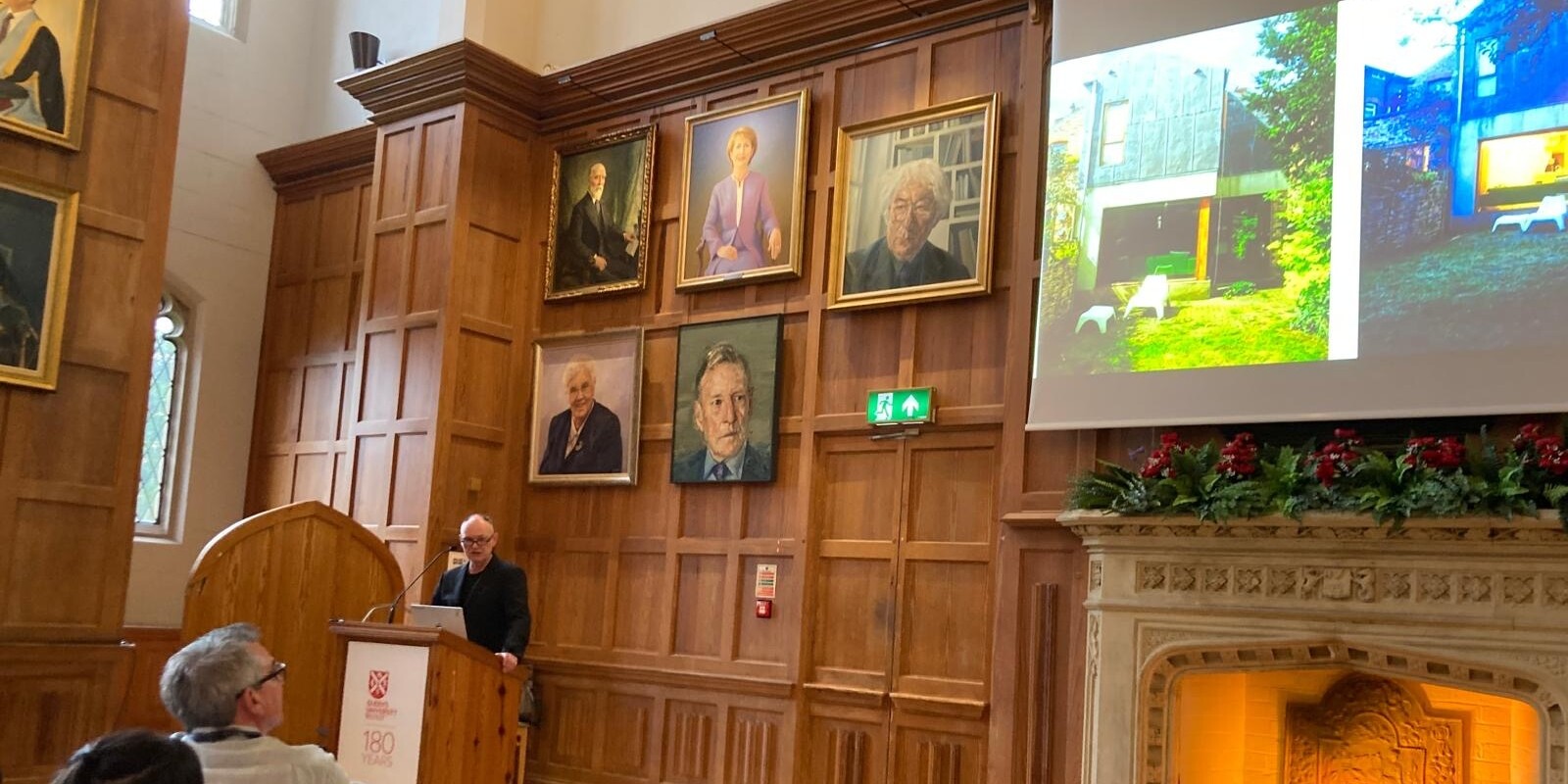
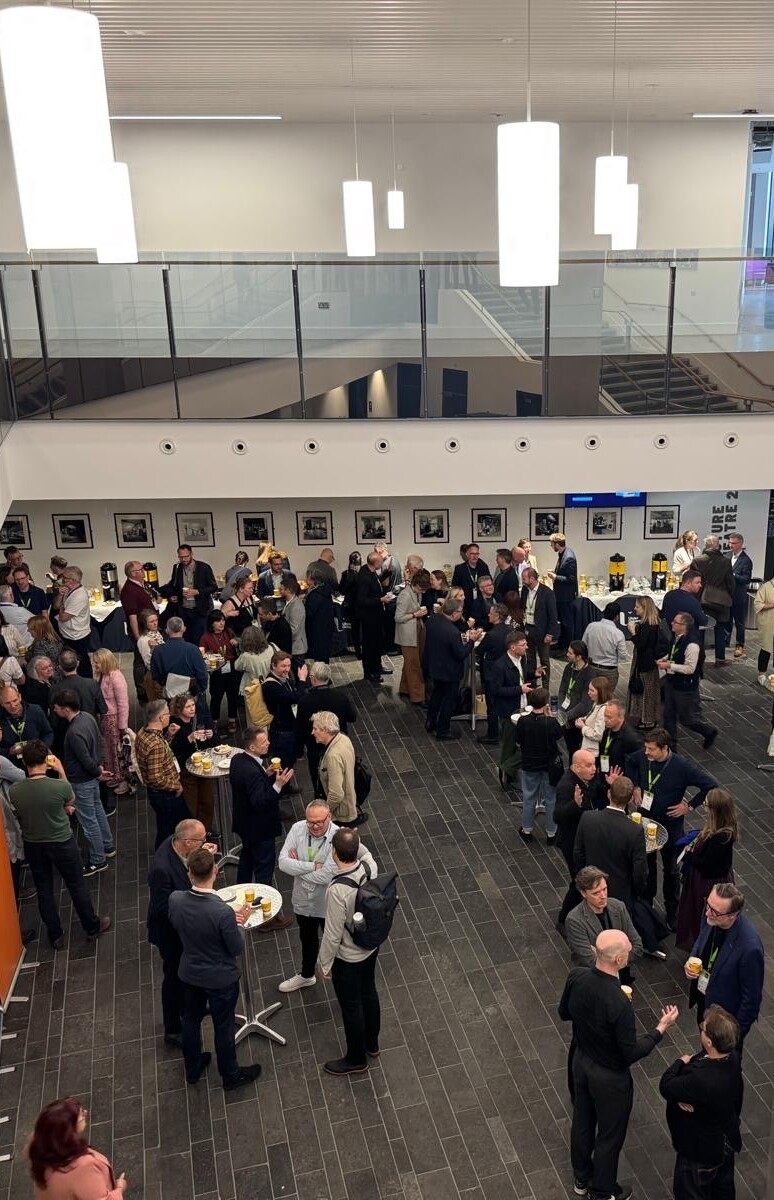
The evening concluded with an opportunity to relax and network in the Great Hall, before Professor Greg Keeffe of Queen's University Belfast entertained delegates with his after-dinner address, Adventures in the Technoscape. His account of skip-diving to extend his own house certainly fitted the conference theme, sustainable architecture ahead of its time, through re-use and scavenging!
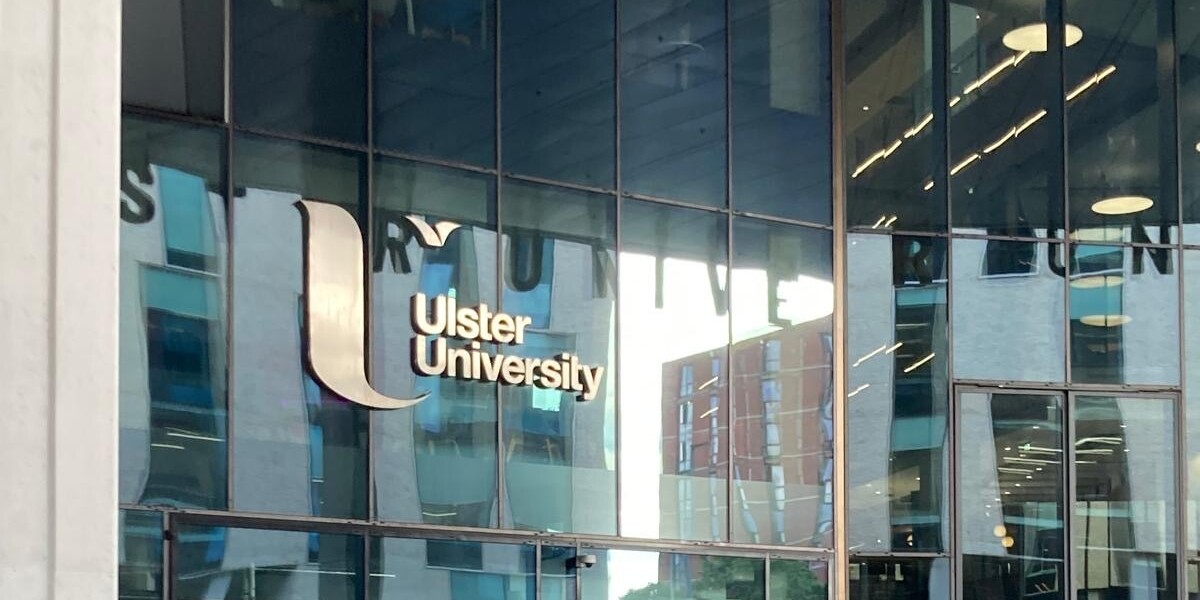
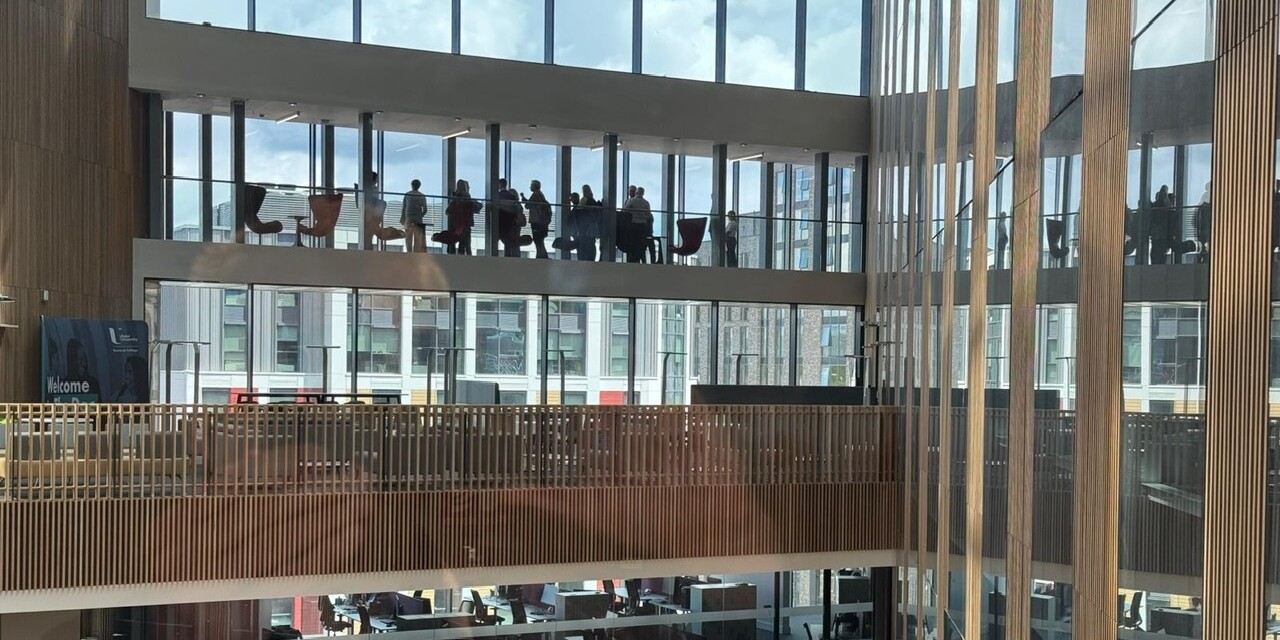
Day Two opened at Ulster University's new Belfast campus with an immediate grounding in financial reality: Higher Education funding in Northern Ireland has been frozen since 2009, representing a cut of around 50% in real terms. Less is more, in this context, is not a design philosophy but a condition of survival, and it set the frame for everything that followed. Elaine Hartin, Chief Strategy and Finance Officer, set out the financial context before Michael Fitzpatrick, Director of Estates, described the University's journey from its former Jordanstown site to its current three-campus model across Belfast, Coleraine and Derry-Londonderry. Ana Cristobal of Page Park Architects then framed the masterplanning challenge: finding shared institutional principles across genuinely distinct places, rather than imposing a uniform architectural language. The practical consequences of this thinking were instructive, space per student reduced from 9m² to 7m², but in demonstrably better quality environments; public realm treated as an integral part of the estate rather than an afterthought; and a simple timetabling intervention, moving 10% of Tuesday teaching to Fridays, that simultaneously relieved pressure on teaching space and car parking. Keith Bradley of Feilden Clegg Bradley Studios spoke to the design of the Belfast campus itself, before tours of the building brought the arguments to life. James Redman of MAKE Architects also detailed the challenge of designing a new teaching building on a constrained city-centre site in Derry-Londonderry.
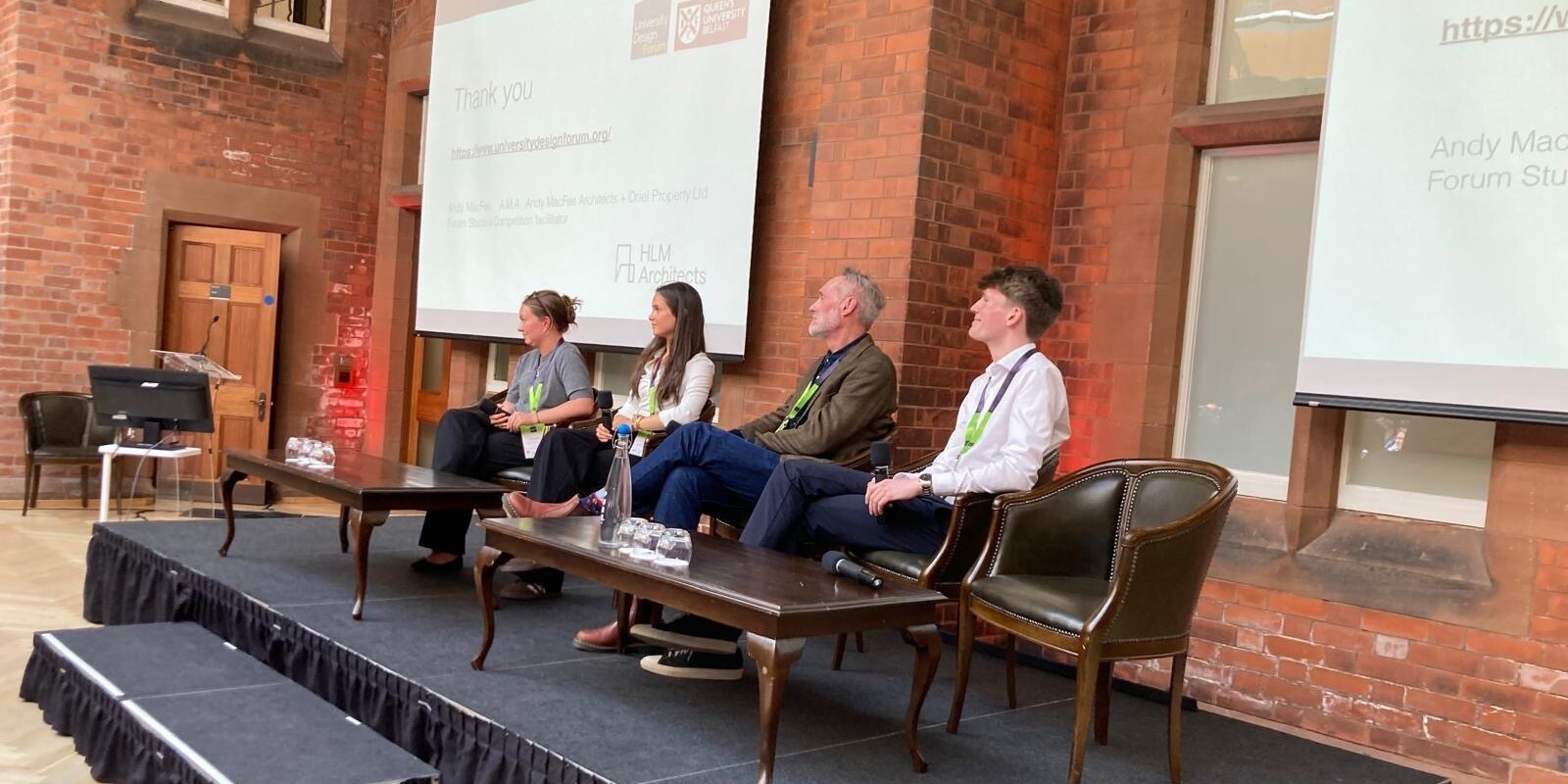
This year the Forum introduced a new format for members' submissions, inviting contributions directly from the membership in response to the conference theme, an innovation that significantly enriched the programme on both days. The Day Two session was facilitated by Rob Joyce of Graham Construction. AtkinsRéalis presented work on data visualisation in estate decision-making, making a compelling case that the more elusive qualitative data, vision, ambition, user experience (left side), needs to be understood alongside hard environmental and utilisation data (right side), and that making both legible, opens up, rather than closes down, strategic conversations. LSE's Julian Robinson and researcher Ziona Strelitz of ZZA Responsive Environments then described their long-running programme of face-to-face, qualitative end-user research, demonstrating that the quantitative and the qualitative need to inform each other rather than compete. Andy Young of Bjarke Ingels Group closed the members' sessions with a thought-provoking talk titled "When Less is More turns into Yes is More”, and the book of the same name, copies of which were awarded to the best two hecklers in the room. Young introduced a taxonomy of four worker types, pundit, warden, grifter and grafter, and used BIG's work on Google's London headquarters to explore how these dynamics shape the built environment. An AI-generated Lego comparison of orange juice and petrol production raised knowing laughs, but the session ended on a note worth citing: "Just because you've worked it all out doesn't mean it's going to happen." A useful corrective to any reading of the conference theme as an argument for optimism alone. The day closed with a lively debate on AI in design, 'friend or foe', between Helen Groves of AtkinsRéalis and Dr Ciarán O'Kelly of the School of Law at Queen's University Belfast, chaired by Julian Robinson.
The conference marked the appointment of Eleanor Magennis as the Forum's incoming Chair, succeeding Trevor Wills, whose contribution as outgoing Chair was warmly acknowledged. The Forum extends its thanks to the events and conference group led by Ian Caldwell and Lianne Goddard. Ian's physical presence was missed at the conference, but his excellent curation still shone through. We are grateful to our hosts, Queen's University Belfast and Ulster University, and to the conference's generous supporters, whose logos appear on the right and whose backing makes the Forum's annual conference possible.
Looking ahead, next year's Annual Conference is anticipated to be in Cambridge, with the University of Cambridge and several of its Colleges acting as potential hosts; further details will follow as the programme is confirmed. As planning gets underway, the Forum is keen to secure conference sponsors early, giving them the opportunity to help shape the programme's themes, lean into and chair sessions of particular interest, and be properly recognised for their support of the event. If you would like to get more involved in the Forum, contribute to a future conference, or explore sponsorship, please get in touch at admin@universitydesignforum.org or events@universitydesignforum.org.
Written by Rupert Cook and Eleanor Magennis.


Resources
Conference Presentations
Seeing Estates Differently: Using Data Visualisation to Inform Better Decisions
Adding user value: Research and adaptation to enhance user experience
Research Group Session: Doing More with What We Have: Rethinking the Future of Large Learning Spaces
International Tour Films for Dublin 2025 and Paris 2026
More from Less - Thoughts from a small practice?
More presentations we have permission to share will be available shortly
Supporters:


News/ 23 June 2026